
Migrating 4x4AT from Magento 1 to a High-Performance Magento 2 Multi-Store.
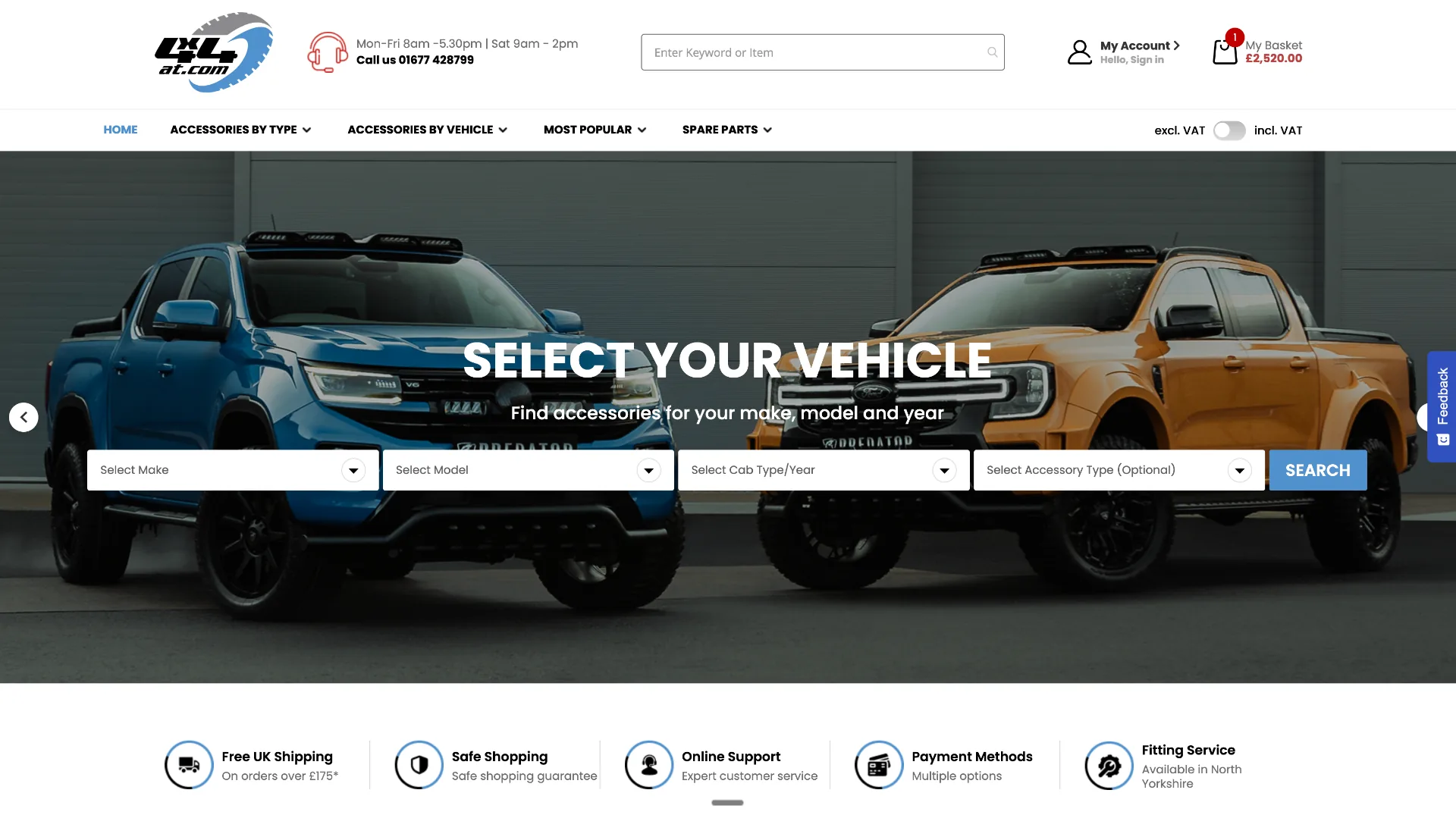
A complete Magento 1 to Magento 2 migration spanning multiple storefronts, a custom performance-first theme, predominantly bespoke modules and warehouse-system plugins.
View live projectA controlled Magento replatform
Shared platform, distinct storefronts
Performance at the core
Bespoke modules and plugins
The challenge
4x4AT had outgrown a Magento 1 estate supporting a large vehicle-accessories catalogue and multiple storefronts. The replacement had to modernise the platform without flattening the specialist catalogue, store-specific rules or operational workflows that made the business work.
Much of the existing capability was business-specific. A simple data migration and off-the-shelf theme would not preserve the custom modules, warehouse connections and merchandising logic relied on by customers and internal teams.
The new storefront also needed performance at its core. Theme architecture, custom functionality and third-party integrations had to be treated as one system rather than allowing each feature to add uncontrolled frontend weight.
The approach
Migration mapping
The Magento 1 catalogue, customers, orders, store views, URLs and operational dependencies were mapped before build work so that data, SEO equity and business processes had an explicit destination.
Performance-first custom theme
A purpose-built Magento 2 theme kept control of markup, assets and interaction patterns rather than inheriting the cost and constraints of a generic storefront package.
Bespoke module rebuild
The majority-custom module estate was reviewed and rebuilt around Magento 2 extension points, preserving the business rules that genuinely differentiated the platform.
Warehouse integration
Custom plugins connect Magento with the warehouse management system so ecommerce orders, inventory and operational workflows remain part of the same commerce estate.
The results
4x4AT now operates on a Magento 2 multi-store foundation with a custom theme, predominantly bespoke modules and warehouse integrations designed around its catalogue and operating model.
The website migration and the custom POS are intentionally presented as separate projects: the storefront serves customers online, while the POS is a reusable staff-sales platform connected to the commerce layer. No unverified performance or revenue figures have been added.
What did not go perfectly
Migrating a heavily customised Magento estate creates more long-term ownership than adopting an off-the-shelf build. The trade-off was deliberate: preserve the catalogue, storefront and warehouse capabilities the business actually needed while giving future changes a Magento 2 foundation.
Project gallery
Screenshots and project visuals from the build, optimisation, or platform work.
Services delivered
Related case studies
More examples across ecommerce, platform work, and custom development.
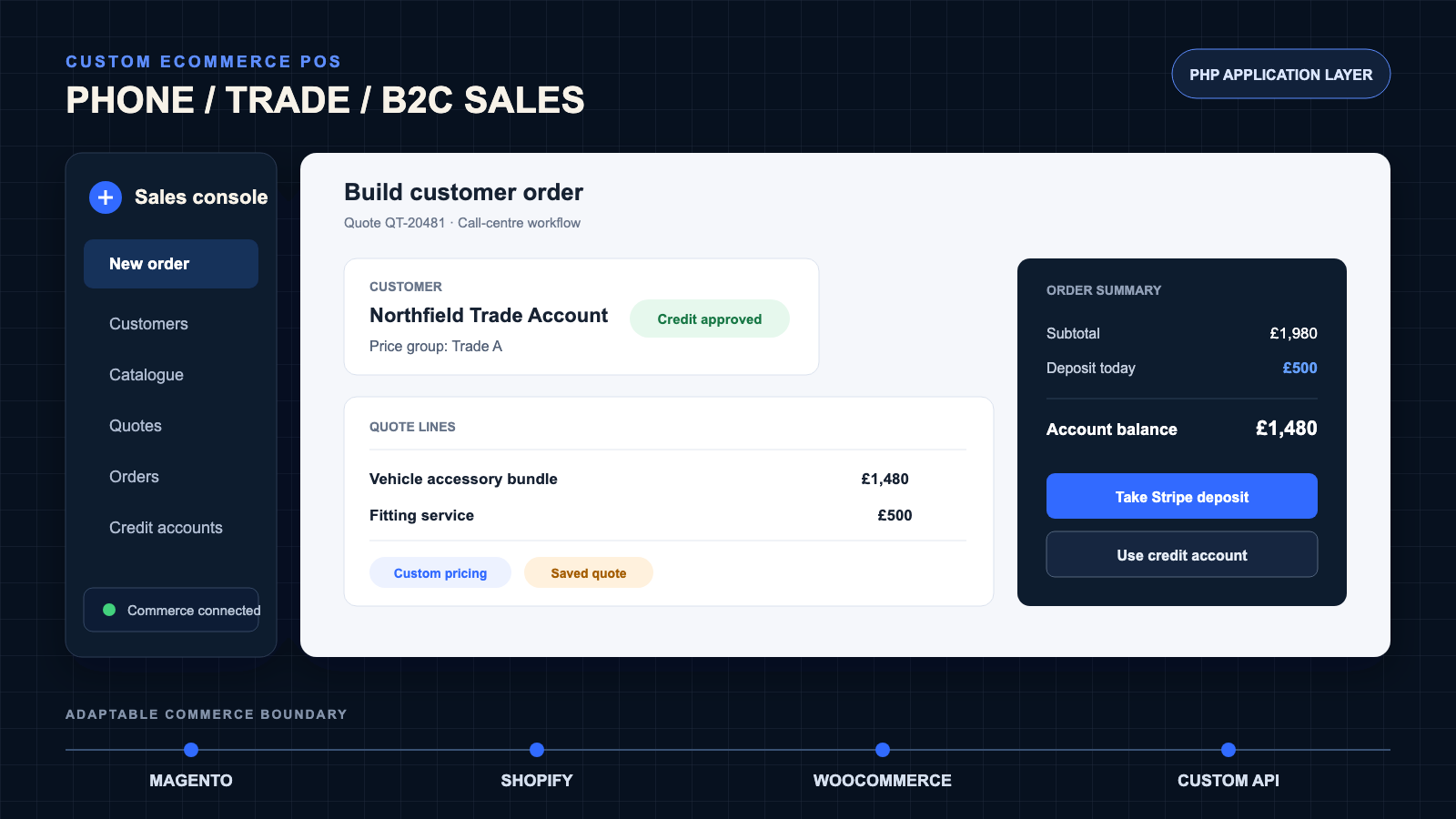
4x4AT Custom Ecommerce POS
A PHP-based staff sales application built for Magento and adaptable to other ecommerce platforms, supporting call-centre, trade and B2C order workflows.
Read case study →
Vanimal Magento Custom Theme
A custom Magento storefront for a specialist van-accessories catalogue, built with performance at its core and connected to warehouse operations through bespoke modules and WMS plugins.
Read case study →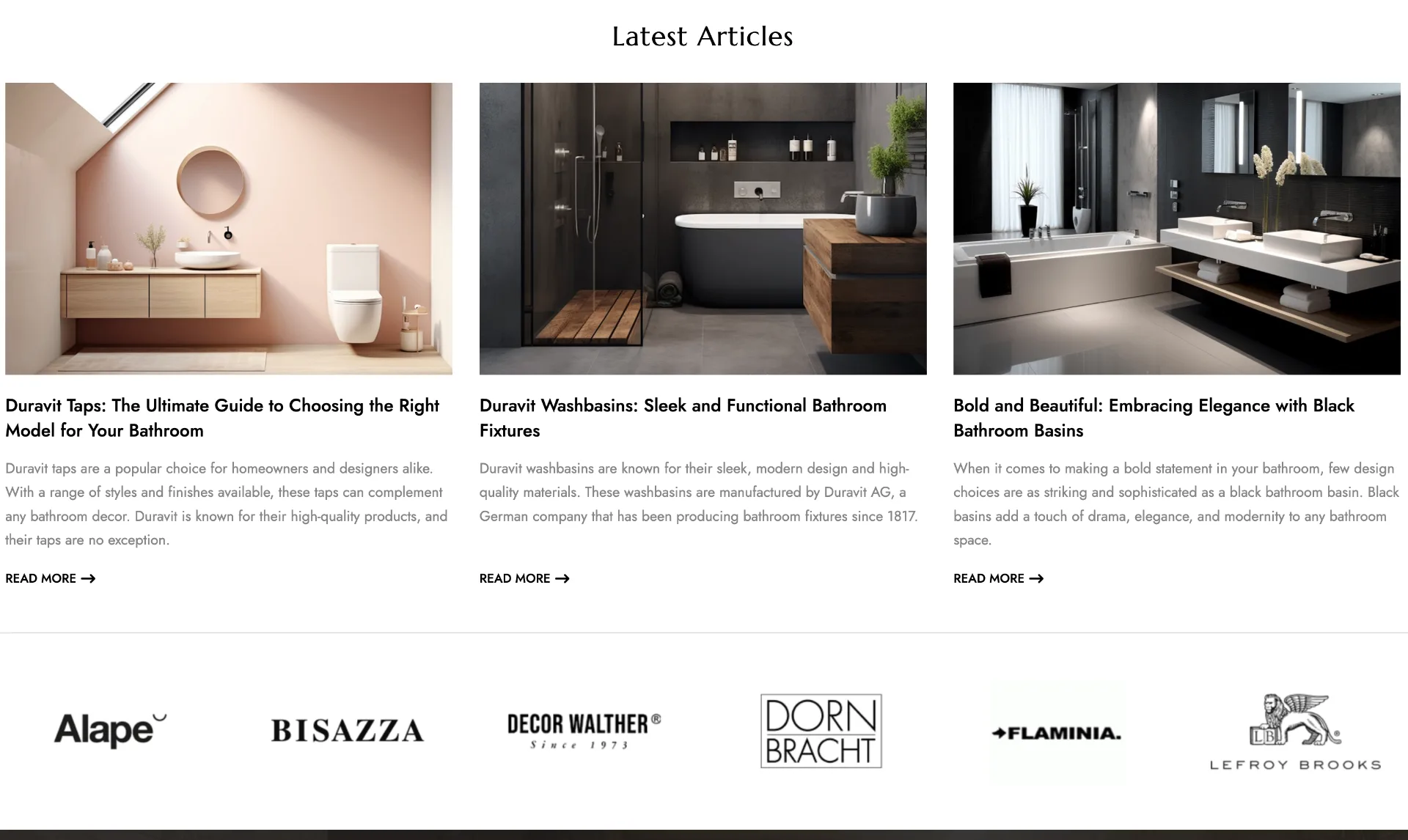
Premium Bathroom Retailer Magento Growth
Magento 2 optimisation, SEO, PPC, and conversion work for a premium bathroom retailer competing in a high-value, research-heavy category.
Read case study →Got a project like this?
Book a free 30-minute Discovery call. We will talk through what is possible for your business and whether I am the right person to deliver it.